
Thien Mu Pagoda
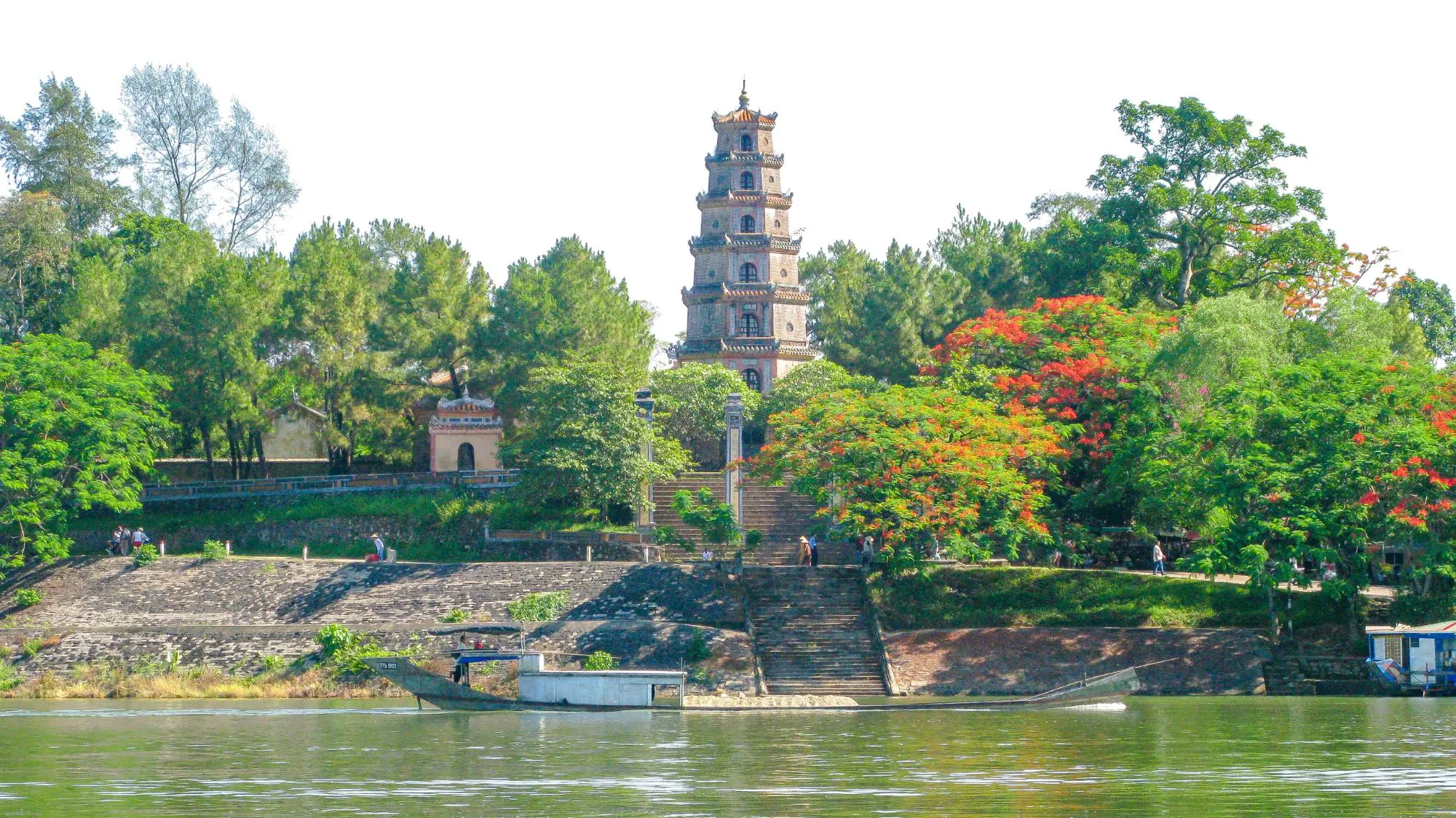
Perched on the banks of the Perfume River, Thien Mu Pagoda is one of Vietnam’s most iconic religious landmarks. Famous for its elegant seven-story tower, centuries-old history, and tranquil setting, the pagoda is a must-visit attraction for travelers exploring Hue and the cultural heritage of central Vietnam.
About Thien Mu Pagoda
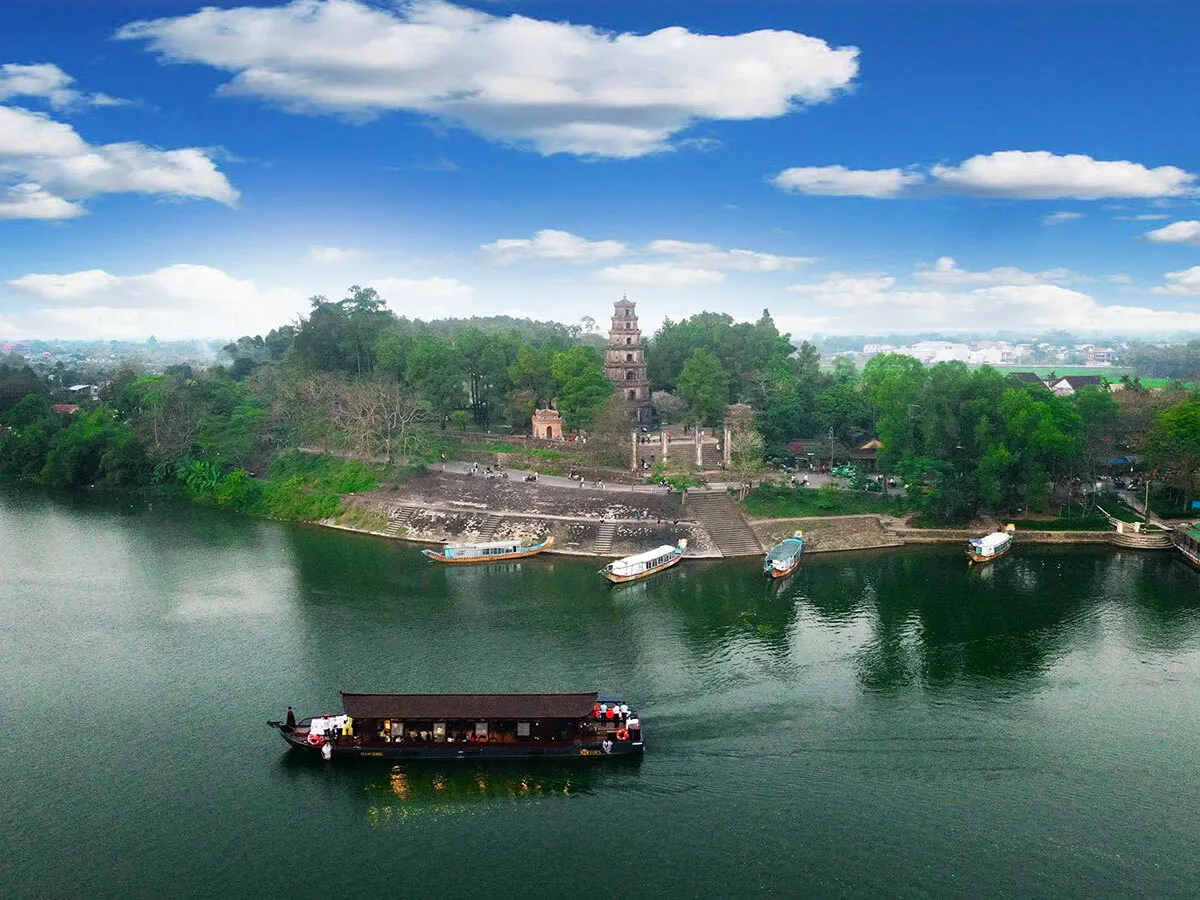
Thien Mu Pagoda is one of the most iconic religious and cultural landmarks in Vietnam, beautifully situated on Ha Khe Hill overlooking the Perfume River in Hue. Founded in 1601 during the reign of Lord Nguyen Hoang, the pagoda has become a symbol of Hue and one of the country's most significant Buddhist sites.
The name "Thien Mu," meaning "Heavenly Lady," originates from a local legend about an elderly woman who appeared on the hill and foretold that a great leader would build a pagoda there to bring prosperity to the region. Inspired by this prophecy, Nguyen Hoang ordered the construction of the temple, marking the beginning of a spiritual legacy that continues to this day.
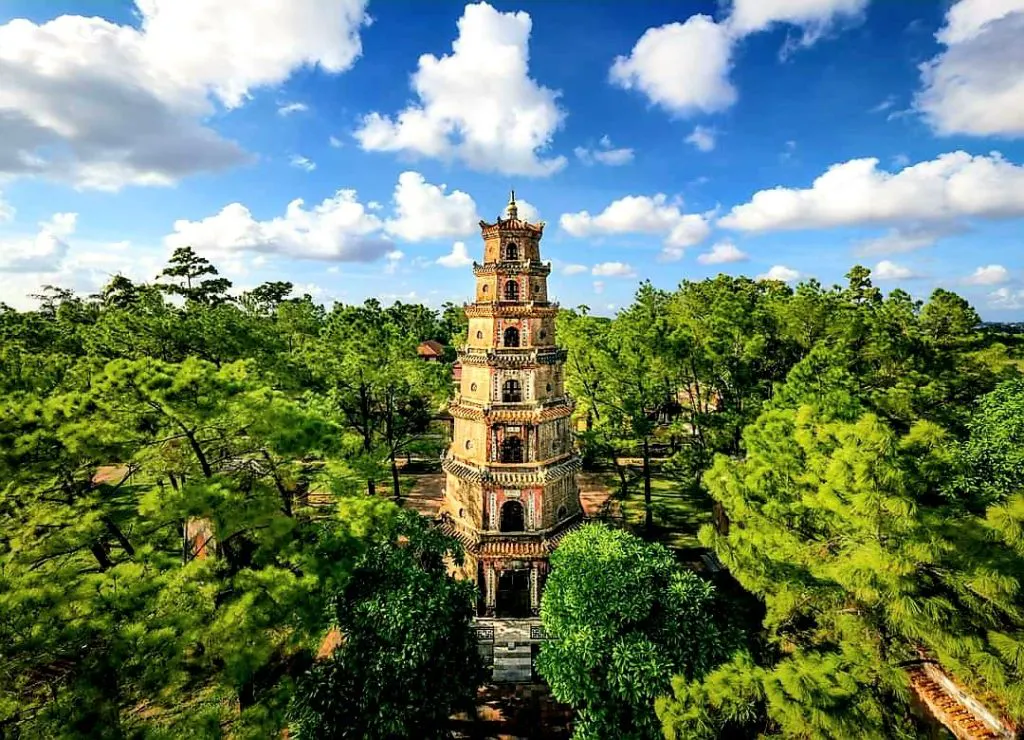
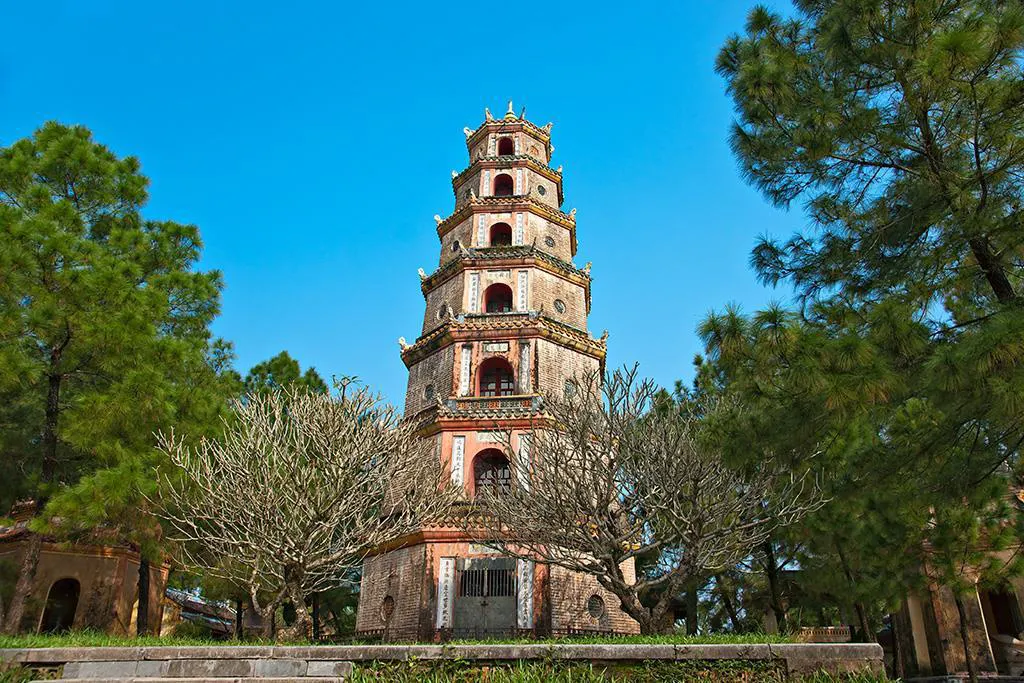
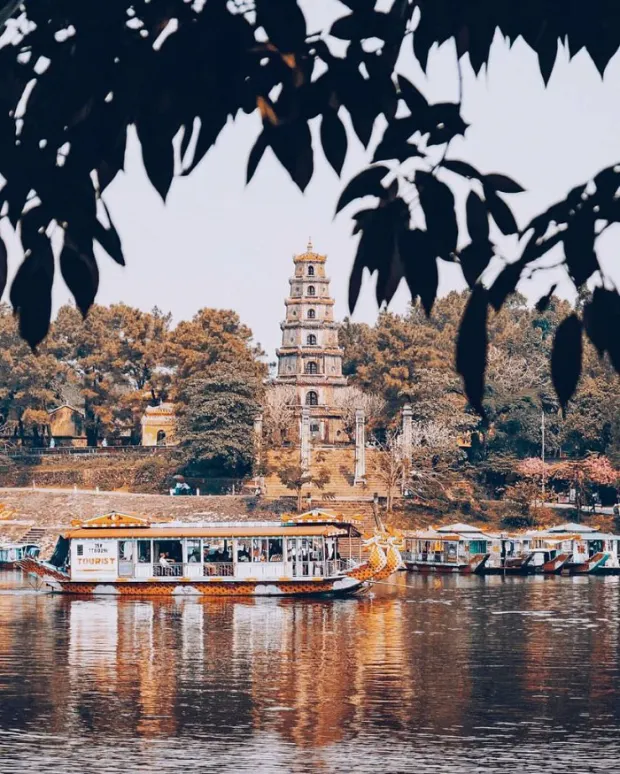
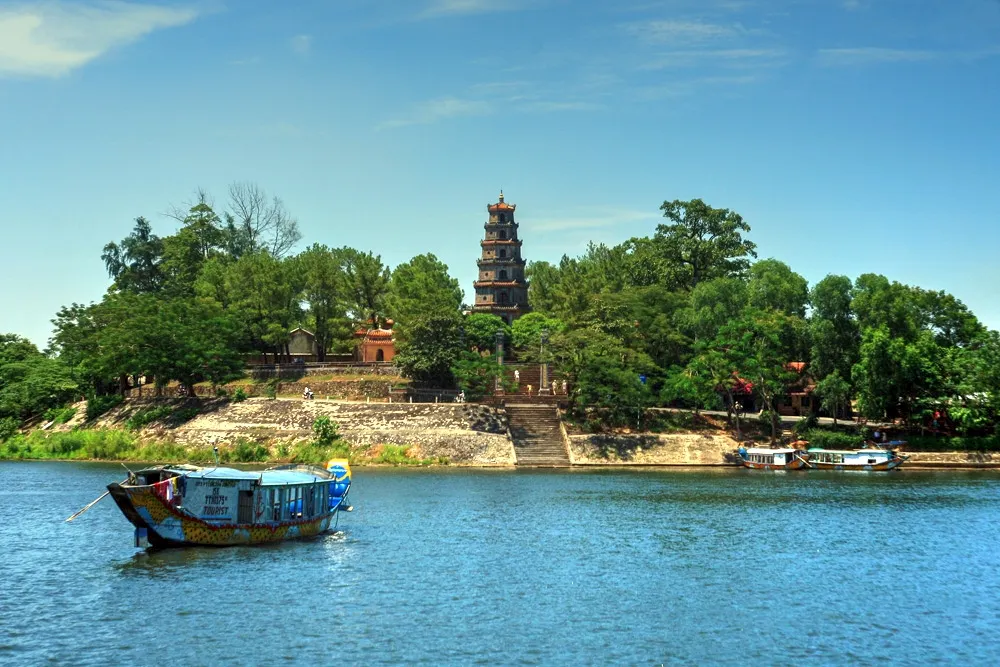
The most recognizable feature of Thien Mu Pagoda is the seven-story Phuoc Duyen Tower, built in 1844 during the Nguyen Dynasty. Standing gracefully beside the Perfume River, the tower has become one of the most photographed landmarks in central Vietnam. The pagoda complex also includes beautiful temple halls, peaceful gardens, ancient stone monuments, and valuable Buddhist relics that reflect centuries of religious devotion and architectural craftsmanship.
Throughout its history, Thien Mu Pagoda has played an important role in Vietnam’s spiritual, cultural, and historical development. It has served as a center for Buddhist worship and education while also witnessing many significant events during the Nguyen Dynasty and modern Vietnamese history. Visitors can still see the historic Austin car associated with the monk Thich Quang Duc, whose self-immolation in 1963 became an internationally recognized symbol of religious protest.
Today, Thien Mu Pagoda remains a place of active worship and a must-visit destination for travelers exploring Hue. Combining spiritual significance, historical depth, elegant architecture, and stunning riverside scenery, the pagoda offers a memorable experience that captures the essence of Vietnam’s cultural heritage and Buddhist traditions.
Thien Mu Pagoda Photo Gallery
Browse stunning photographs of Thien Mu Pagoda and experience the beauty of Hue’s most famous spiritual landmark. Explore the iconic Phuoc Duyen Tower, sacred temple grounds, riverside scenery, and centuries of Buddhist heritage through a collection of inspiring images.
How to Get to and Around Thien Mu Pagoda
Long-distance buses and coaches connect Hue with major cities such as Hanoi, Da Nang, Hoi An, and Ho Chi Minh City. After arriving at Hue's bus stations, visitors can take a taxi, ride-hailing service, or local transport to Thien Mu Pagoda, which is approximately 5 kilometers from the city center.
Hue Railway Station is served by trains running along Vietnam’s North–South Railway. Travelers arriving by train can easily reach Thien Mu Pagoda by taxi, motorbike, or bicycle in about 10–15 minutes.
Driving or renting a private car is a convenient way to visit Thien Mu Pagoda. The route from central Hue is straightforward and follows scenic roads along the Perfume River. Parking is available near the entrance.
The nearest airport is Phu Bai International Airport, located approximately 15 kilometers south of Hue. From the airport, visitors can reach Thien Mu Pagoda by taxi, airport transfer, or rental vehicle in around 30 minutes.
Frequently Asked Questions About Thien Mu Pagoda
Thien Mu Pagoda is famous for its iconic seven-story Phuoc Duyen Tower, its location overlooking the Perfume River, and its status as one of Vietnam’s oldest and most important Buddhist temples.
No. Admission to Thien Mu Pagoda is free, making it one of the most accessible cultural and religious attractions in Hue.
Thien Mu Pagoda was founded in 1601 by Lord Nguyen Hoang, making it more than 400 years old and one of the oldest religious sites in central Vietnam.
Most visitors spend between 1 and 2 hours exploring the pagoda complex, enjoying the river views, visiting the temple halls, and learning about its history.
Early morning and late afternoon are ideal for visiting due to cooler temperatures and beautiful lighting. The dry season from February to August generally offers the most pleasant weather.
Other things you might like

Join our Newsletter Clan
Get VietNam inspiration direct to your inbox. Don't miss the inside track from our VietNam experts on exciting trip ideas, unique attractions and hidden gems loved by locals.